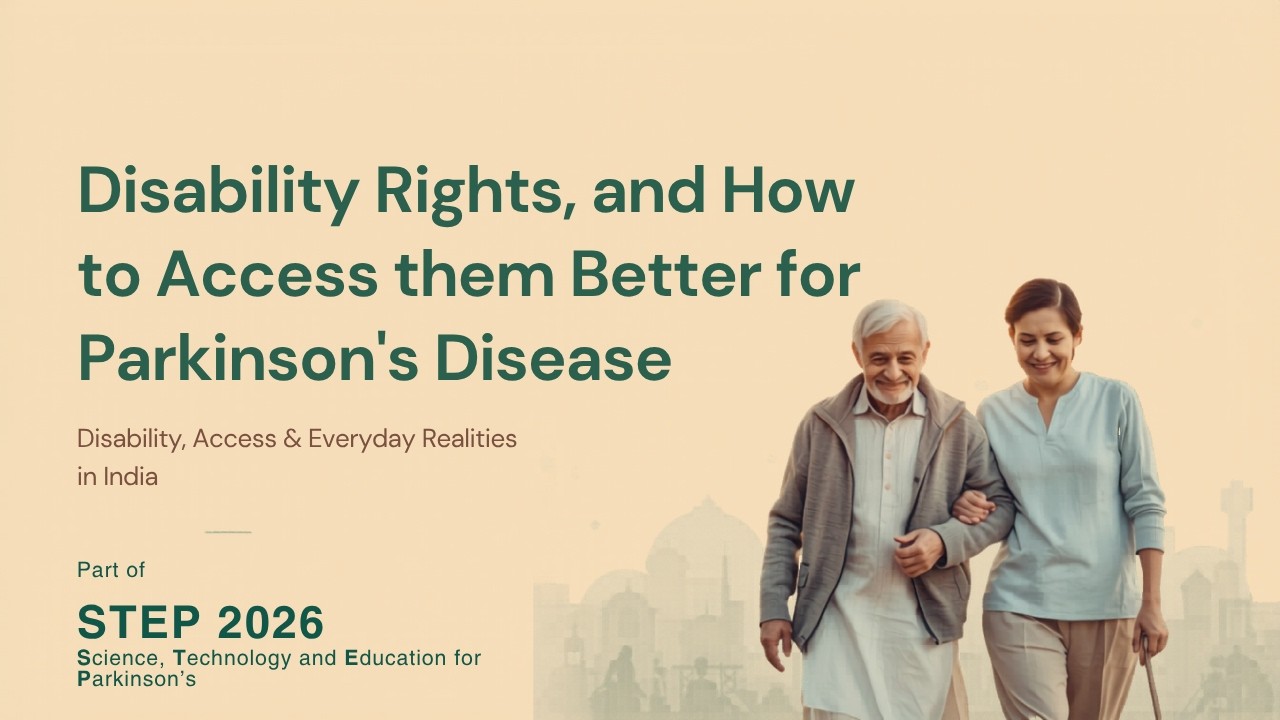
STEP 2026 : Science, Technology and Education for Parkinson's

A World Parkinson's Day Event

STEP 2026 – Science, Technology and Education for Parkinson’s was a World Parkinson’s Day initiative that brought together people living with Parkinson’s, caregivers, clinicians, disability advocates, researchers, and innovators at IIT Bombay. In it's second edition this year, STEP 2026 built on past experiences to drive actionable insights and behavious with a series of focused talks and tailor made educational material.
Co‑organized by Lifespark Technologies and NCPEDP, the program focused on proactive Parkinson’s care and accessing disability rights—from understanding disease progression and managing mobility and fall risk, to leveraging assistive technology, physiotherapy, nutrition, and smart living strategies.
Through expert talks, patient and caregiver experience sharing, technology demonstrations, and rights‑based panel discussions, STEP 2026 highlighted Parkinson’s as both a health condition and a recognized disability, emphasizing dignity, independence, and inclusion.
The event reinforced a simple but powerful message:Parkinson’s care works best when medical science, lived experience, technology, and community come together.
A detailed narrative of the key sessions:
Topic | Link |
Opening Address: Disability, Inclusion & Ecosystems of CareThe opening address reframed Parkinson’s as a disability shaped by systemic barriers, not personal limitations. The session underscored the need for inclusive healthcare, accessible environments, and rights‑based approaches to care. In his opening address, Amey Desai, Founder and CEO of Lifespark Technologies, framed Parkinson’s through a powerful lens—not just as a medical condition, but as a disability shaped by systemic barriers. Highlighting Lifespark’s collaboration with NCPEDP, he emphasized that disability does not reside in individuals, but in environments, systems, and lack of access. This rights-based perspective set the foundation for the day, followed by insightful addresses from Mr. Arman Ali (Executive Director, NCPEDP) and Retd. Prof. Aliasgar Contractor (IIT Bombay), who reinforced the importance of inclusive innovation, policy, and ecosystem thinking in healthcare. | |
Inflection Points in the Parkinson’s JourneyUnderstanding Parkinson’s: Making the Invisible Visible The first expert session focused on what is often missed in Parkinson’s care. Dr. Anil Venkitachalam spoke about inflection points in the Parkinson’s journey—early, subtle changes that can easily go unrecognized until they significantly affect quality of life. From sleep disturbances and mood changes to early mobility shifts, the session encouraged participants to track their journeys proactively using the Inflection Point booklet, stressing that early awareness enables early action. | |
Proactively Managing Mobility in Parkinson’sBuilding on the first session, Dr. Darshan Doshi addressed one of the most pressing concerns for people with Parkinson’s—falls and mobility decline. His session focused on understanding freezing of gait, balance challenges, and movement fluctuations, while offering practical strategies to manage them proactively. Participants were introduced to a 12-point mobility checklist, reinforcing the idea that falls are rarely sudden—they are often preceded by warning signs that can be addressed in time. | |
Technology Session: WALK + PATHFINDERThe technology session shifted the conversation from why falls happen to how we can prevent them. Amey Desai demonstrated how WALK, a wearable neuromodulation device, and PATHFINDER, a digital self-management platform, work together to identify fall risk, support mobility, and empower individuals and caregivers in daily life. The emphasis was clear: technology matters only when it fits seamlessly into real patient workflows and supports safer, more confident living. | |
Patient & Caregiver Experience SharingVoices That Matter Most: Patient and Caregiver Experiences One of the most moving segments of the day was the experience-sharing panel, where people living with Parkinson’s and their caregivers spoke openly about diagnosis, falls, emotional adaptation, caregiving, and resilience. These stories—unfiltered and deeply personal—reminded everyone in the room why awareness, rehabilitation, and inclusive systems are not optional, but essential. | |
Panel: Parkinson’s – From Rights to AccessThe first panel discussion tackled a critical but often overlooked question: What does it mean to live with Parkinson’s as a recognized disability in India? Moderated by Mr. Arman Ali, the panel explored gaps in awareness, access to therapy, assistive technology, insurance, and policy implementation, despite Parkinson’s being recognized under the RPwD Act, 2016. The conversation reinforced a key idea—rights only matter when they translate into real access on the ground. | |
Assistive Technology Startup ShowcaseInnovators showcased emerging assistive technologies aimed at improving independence and accessibility. The session encouraged collaboration between patients, clinicians, and startups to build solutions that truly meet real needs. | |
Hacks and Hopes : Practical Tips for Parkinson'sFollowing the panel, Dr. Sachin Adukia's session distilled Parkinson’s care into a powerful idea: meaningful improvement often lies in practical, everyday “hacks” paired with emerging technologies that bring real hope. He showed that care is moving beyond clinic snapshots to real-time tracking of symptoms, enabling more precise treatment, while simple tools—from laser cues and vibration devices for freezing of gait to toilet seat raisers, adaptive utensils, and magnetic-button clothing—can dramatically ease daily life and restore independence. The overarching message was clear: don’t underestimate small, targeted changes—they reduce caregiver burden, preserve dignity, and create immediate impact—while staying open to new technologies that are steadily making mobility, communication, and safety more achievable | |
Real Time Monitoring and Digital Biomarkers in Parkinson'sFurther delving into the theme of watch, catch and manage, Dr. Vibhor Pardasani highlights that effective Parkinson’s care depends not just on medication, but on accurate, consistent symptom tracking that captures how symptoms fluctuate across the day. He emphasizes that tools—ranging from simple diaries to wearables and smartphone apps—can help patients and caregivers convert daily experiences into clear patterns, enabling doctors to tailor the right dose at the right time for truly personalized care. By tracking motor symptoms like tremor and stiffness, along with fluctuations, dyskinesia, and key non-motor symptoms such as constipation, patients can reduce guesswork during consultations and support better clinical decisions. At the same time, he urges a balanced approach—embracing useful technologies while remaining cautious about unproven claims—positioning tracking not as a burden, but as a powerful bridge between real-life experience and more precise, responsive treatment | |
Group Physiotherapy SessionAn interactive movement session demonstrated simple, repeatable exercises for balance and mobility. Participants experienced first‑hand how consistent movement builds confidence and safety. | |
Closing Reflections & Community BuildingAs the day drew to a close, the message was hopeful and affirming:Parkinson’s may change the way you move—but it does not define your journey. STEP 2026 concluded not as an endpoint, but as a starting point—for conversations, collaborations, and collective action. With gratitude expressed to partners, clinicians, advocates, caregivers, and the Parkinson’s community, participants were invited to continue conversations over lunch, strengthening the sense of shared purpose. |